
HISTORY OF SAN MIGUEL: A historic building or simply old?
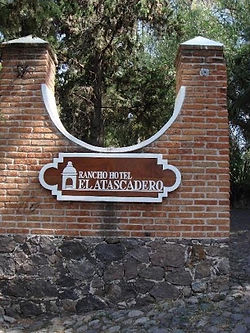
The Hotel Rancho Atascadero on Santo Domingo has become the focus of public debate after its recent sale and demolition. Critics point to two losses: the destruction of a historic landmark and the replacement of a beloved boutique inn with yet another luxury hotel, a change many see as emblematic of San Miguel de Allende's continuing gentrification.
To distinguish between a historic building and one that is simply old, preservation authorities—such as the National Park Service in the United States and Mexico's National Institute of Anthropology and History (INAH)—apply broadly similar criteria. Whether a property qualifies for historic designation rests on three fundamental pillars: age, significance, and integrity.
For INAH, this generally means structures built between the sixteenth and nineteenth centuries that possess religious, historical, or Hispanic cultural significance. They must also retain exceptional architectural value and physical integrity.
Protected properties include churches, military buildings, private residences, and historic infrastructure such as aqueducts and railroad lines. Historic buildings feature irreplaceable, era-specific craftsmanship and rare materials that cannot be easily replicated. This, of course, is only a simplified overview of INAH's far more detailed designation criteria.
However, a property does not become historic simply because it has existed for a long time. Achieving official historic status requires documentation and official designation. Rancho Atascadero never received such a designation from INAH, in part because it lies outside San Miguel de Allende's UNESCO World Heritage core.
That happens to be the unfortunate reality, but the history of the property is fascinating in its varied phases, long before it evolved into the well-known Rancho Hotel Atascadero. Much of the history comes from Felipe Cossío del Pomar's memoirs and other historical sources, documenting how the property evolved through several distinct phases.
Sometime in the late eighteenth to early nineteenth century it was simply a rural ranch located outside San Miguel el Grande (now San Miguel de Allende). The name Atascadero (“muddy place” or “boggy crossing”) referred to the ravine and springs in that part of town, and it survived every subsequent change in ownership.
The property was especially valuable because it contained natural springs, fertile agricultural land, and extensive grazing land. It functioned as a ranch for almost one hundred years, and then it underwent an interesting transformation. During the government of Porfirio Díaz (1876–1911), it was acquired by Hipólito Chambon, a French entrepreneur with the idea of establishing a Mexican silk industry. Porfirio Díaz was intent on expanding all types of industry in Mexico and also happened to be Francophile, encouraging French investments.

Recognizing the local climate and fertile soil as ideal, Chambon covered the Atascadero rolling hills with mulberry trees, whose heart-shaped leaves sustain silkworms. This planting initiative extended beyond the ranch itself, eventually lining the streets and plazas throughout San Miguel de Allende. He also constructed shaded reservoirs on the property to raise trout for his culinary enjoyment. The raw silk harvested from the ranch was transported to Chambon’s urban manufacturing operations, such as the famous La Moreliana factory in Mexico City, to produce fine silk rebozos and other cloth.

When Chambon died, the property remained with his heirs for some time and was eventually purchased in the 1930s by Pepe Ortiz, who found San Miguel de Allende a quiet place far the bustle of Mexico City.
Ortiz even attempted to rename the property “Cañada de la Virgen” because of his devotion to the Virgin Mary, but the new name never caught on.
He married Lupita Gallardo, a Mexican movie star in a big wedding to which many movie stars and famous personalities were invited. Among them was Jose Mojica, an actor and opera tenor who became enchanted with San Miguel and eventually bought a property as well.
Pepe Ortiz built the iconic outdoor fronton court, a traditional Spanish court, used for a sport blending the speed of Jai Alai with racquetball tactics.

In the early 1940s the property changed hands once again. Felipe Cossío del Pomar purchased it from Pepe Ortiz and began a transformation according to his own vision. Pomar and Stirling Dickinson had founded the School of Fine Arts of San Miguel, originally at the Bellas Artes and later moved to the Instituto Allende.
Pomar wanted to create a residence for art students as he helped establish what would become the town's internationally known art community. He built a cobblestone entrance road, student apartments, studios, a dining hall, a swimming pool and gardens.
It was turned into a hotel in the 1950s, bought by the Mexican couple Gloria and Fortunato Maycotte, a former military pilot. They transformed it into the Rancho Hotel Atascadero, one of the first tourist hotels of San Miguel de Allende.


They spent decades converting, expanding, and managing it. Under their stewardship, it grew into a beloved 51-room resort with gardens, pools, and tennis courts, operating for more than seventy years, until its last sale. Those of us who frequented the restaurant still remember the lovely and peaceful environment beneath hundred-year-old trees. A quiet retreat so close to town.
The Maycotte family remains active in San Miguel, with one of the descendants owning the Dos Buhos winery.
Today we witness the latest transformation of Rancho Atascadero, changing its face and function one more time. The property was purchased by a major hotel corporation (no official name has yet been provided) and the demolition of the buildings, and the cutting down of the old trees appears to be complete. The upcoming complex will feature approximately 97 rooms and 48 residences and is scheduled to open in 2027.
The deed is done and there is no turning back. The only thing that remains are the memories of those who knew the old place and loved it. Here are some comments from locals.
“Yes, I remember it…That quiet, inviting hotel was among the first establishments to define this town, back when it was not a tourist postcard but a place people genuinely called home. It was a place where life moved at a gentler pace—where many of us created cherished memories, and where our parents worked, visited, or simply wandered its grounds.”
“I don't know about you, but it hurts to see places like this disappear. Because it isn't just a hotel—it's a piece of San Miguel de Allende's collective memory.”
“But then again… they say everything changes, that everything evolves. The real question, though, is this: is it really evolving… or is it being erased—as some claim, through the extortion demanded by this government?”
Which brings us to the eternal paradox of “progress” versus status quo. Change is inevitable, and each new alteration whether in one’s personal life or that of a community carries consequences. San Miguel de Allende is transforming itself once again, after its many transformations since its founding in 1542. Whether it is for the better or worse can only be answered by each and every one of us, and what can be done about it also rests in the hands of the local residents and their votes.

Comments