
THE HISTORY OF SAN MIGUEL
Who were Leobino Zavala and Margarito Ledesma?
On December 27, 1887, Leobino Zavala Camarena was born in Uriangato, about 140 kilometers from San Miguel de Allende. His father was Braulio Zavala, credited with writing the famous song “Allá en el Rancho Grande.” Leobino went to school locally but earned a law degree in 1910 from the University of Guanajuato. He then moved to San Miguel, where he remained for the rest of his life.
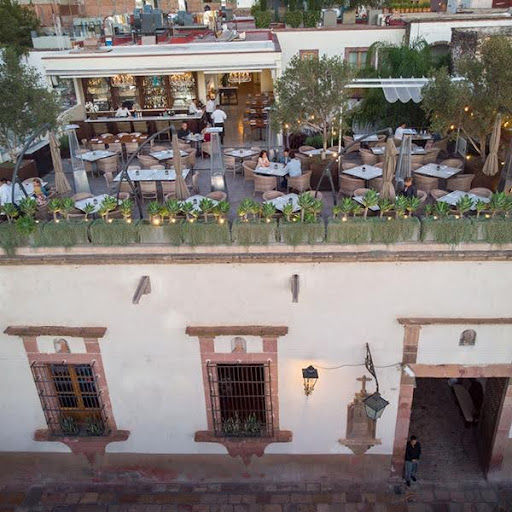
In San Miguel he practiced his profession, but concerned about the lack of secondary education in the city, he founded the Commercial Secondary School of Nursing and Obstetrics here. He also served as a federal deputy twice in the Legislature of Mexico. Zavala was married to Guadalupe Vallejo, and they lived in the house across from the church of San Francisco on Calle Juarez. The spot has been a hotel for many years, called Casa Blanca.

Zavala’s involvement in the community went beyond his political posts and the founding of a secondary school. In 1936, along with the singer José Mojica, Sterling Dickinson, and Felipe Cossío del Pomar, he founded the “Friends of San Miguel” society, whose purpose was to preserve the architecture and artistic treasures of the city. Consequently San Miguel de Allende became a mecca for international artists and grew substantially because of tourism.
But there was another side to Leobino Zavala, some might say a schizophrenic, comical one. In 1950, he published a book of poetry under the pseudonym of Margarito Ledesma, and his true name and that of Margarito became one, with his alter ego sometimes overtaking his own persona.
Leobino Zavala insisted that Margarito Ledesma was a separate individual. He said that he had somehow come into the possession of those poems sent to him for review and editing, and that he took it upon himself to publish them. Naturally, there was never anyone other than Zavala himself who created this separate personality, and he wrote poems in Margarito’s name.
Margarito Ledesma described himself as “the unintended humorist,” and was unabashedly self-deprecating even in the title of one of his collections: “Your useless servant, Margarito Ledesma.” Despite their apparent simplicity and disparagement by literary critics, the poems of Margarito Ledesma remain relevant because they capture the traditions and events of his people. He placed his characters in the town of Comonfort—supposedly where Margarito was born—and calls himself the Chamacuero poet, since that was the pre-Hispanic name for Comonfort. The fictional Margarito became so real in people’s minds that some sources claim that Leobino Zavala’s birthplace is Comonfort!
With incisive wit, Margarito’s poems blend humor, comedy, and caricature with biting social criticism. He is considered one of the brilliant writers of 20th century Mexican literature, and it is said that Pope Pius XII kept a copy of his poems among his favorite books. Margarito saw the world from a reductive and provincial perspective. He “assumed” that “the Great Napoleon” was from the United States, and that the love tragedy written by William Shakespeare was “between Romero and Juliet.
His pretense at literary and historical ignorance resulted in several witty poems, one of which is titled “Remembrances,” dedicated to a local young woman.
Your eyes are like two topaz globes,
Seen shining from afar
That cast glimmers and reflections,
Like the lighting of a palace.
Your mouth like a celestial urn,
Is guarded by angelic armies,
Richly adorned with delights,
Like honey from a honeycomb.
When I gaze upon your body,
I see a resemblance without doubt
Of the Venus cast there in Rome
By a sculptor named Milo.
You are Cleopatria, Helen of Troy,
You are so much like Lucretia,
That when you leave the church,
You simply shine, just like a jewel
Not to leave the reader wondering, Margarito explains in a note at the end of the poem that he reckons “this sculptor's real name must have been Emilio, and that his friends and acquaintances must have called him Milo out of pure affection, just like they call Don Ulalio the corn farmer Lalo here.”

Another poem addresses the use of tobacco, which apparently he was not fond of. It is a mix of local tradition and social commentary disguised in a simple poem he calls “For Tobacco.” Translation of an excerpt follows.
Don Piedá sells tobacco
He doesn't even try to hide,
And it hits the skinny man
Like a mule's kick…
All to earn just a few coins.
The real meaning of the poem is explained in his “note” at the end. Margarito claims that maybe “Don Piedá will think twice and stop selling that tobacco that's so harmful to people, since they say he cures it with donkey urine.” He hopes that after reading this poem “he'll mend his ways… It's so bad for us, it gives us a bad reputation…it bites you like a leech.” So humor aside, he makes a social commentary that might inspire some to quit smoking, “that awful tobacco that makes you want to vomit.”
One more example of his poetry is pure political commentary. The title is “From yesterday to today, important changes in the revolutionary process.”
Not long ago they called them
chiefsToday they say they’re presidents
They put the fear into people
Because mischief is what they do.
They grab whoever they can find
And tell him, “Go, you’re now in charge.”
Then off they go on drunken sprees,
until they get completely drunk.
They strap their pistols on
And slouch behind a table.
With gravity nodding their heads
as if busy with affairs of state.
Elbows planted, elbows glued,
they snap at you for naught at all,
treating us badly one and all,
they’ll even fine you if you pee.
hough they hear the people shout,
They don’t calm down even a bit
because what they really want
is to get what they can out of it
Until they tire of playing president.
The real person—Leobino Zavala—died in San Miguel de Allende on December 27, 1974, exactly 52 years and 6 days ago. Of course, Margarito Ledesma died on that same date. But the two names are forever inextricably tied so that in Comonfort some maintain Margarito is still alive (since he was fictional, that is quite true, he continues to live). In San Miguel de Allende some might believe there are descendants of the Ledesma family, which would be the equivalent of saying that there are Sherlock Holmes relatives in London or Mark Twain’s family members in Florida, Missouri.
The lawyer, Leobino Zavala created a character that spun a world according to his own imagination, perhaps satisfying the creator’s humorous demons or angels. He is indeed a humorist, but of his own volition and talent, not “unintentional” as he claimed. Another Sanmiguelense who left a legacy in town.


Very very interesting, Natalie!