
HISTORY OF MEXICO: PEOPLE WHO MADE A DIFFERENCE
- Natalie Taylor
- Mar 2
- 4 min read
An unlikely friendship that changed the course of history

Some people’s lives make a big splash because their actions cause major changes evident to everyone. But there are others, those whose lives seem to scarcely ripple the surface, but who nonetheless alter the course of events. They are the forgotten heroes.
Matias Romero Avendaño was born in Oaxaca on February 24, 1837, and died in New York City on December 30, 1898. These two cities, his place of birth and his place of death, are representative of his greatest accomplishment: a linkage between Mexico and the United States at a crucial time in history. He went to university in Mexico City, becoming a lawyer at the young age of 20, and immediately embarked on a career in public office in 1857 as a diplomat serving President Benito Juarez.
The next ten years were extremely complicated in Mexico. There were two competing governments in place—an illegitimate, conservative one in Mexico City, and a liberal, constitutional government with Benito Juárez as president. But Juarez was on the run, pursued by military powers of the conservatives and later by the imperial forces of Maximilian I, who was installed as emperor of Mexico by the French Emperor Napoleon III. Benito Juárez and his itinerant government moved from city to city, always fleeing northward, always pursued by the military as he protected his constitutional powers and the physical document that granted it.
Foreign alliances were crucial. The conservatives had the backing of European powers, particularly the French, who brought their army to protect the puppet empire of Maximilian. Benito Juarez needed his neighbor to the north: the United States of America. Although not yet a great military power, the U.S. had a growing economy in the industrialized northern states, and could provide significant financial support. Benito Juarez hoped that the new presidential candidate, Abraham Lincoln whom he saw as an honorable man, would help protect Mexico’s sovereignty.
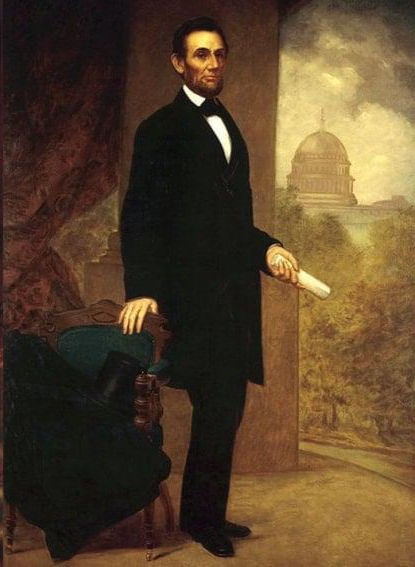

Two men united by character and ideals who should have met, but never did.
For the United States, the greatest threat came from within, with the secession of eleven Southern states and the potential recognition of the Confederacy by European powers. Lincoln’s presidential campaign focused on preserving the Union and preventing the expansion of slavery. Lincoln had met immigrants from Europe but he had never come across someone from Mexico, and without that knowledge he had formed a rather low opinion of Mexicans and other Latinos. All that was about to change.
In 1861, Matias Romero was in Washington as charge d’affaires when he received a communique from President Juárez asking that he deliver a congratulatory note to President-elect Lincoln. Romero traveled to Springfield, Illinois, in the blustery, cold winter of January 1861. Although all the hotels were full of visitors, a hotel manager recognized that the young man was no ordinary traveler because of Romero’s clothing and refined manner, and found lodging for him. On January 19, Romero went to Lincoln’s home to deliver the official congratulations and good tidings from the Republic of Mexico.

Lincoln immediately liked Romero’s polished manners and was quite impressed with the young man, the first person of Mexican descent he had ever spoken to. The letter with good wishes from Benito Juárez was especially welcome because not a single European nation had sent him a congratulatory message, though he was soon to be inaugurated as president of the United States.
Abraham Lincoln sent a letter to Romero two days after their meeting in which he stated that, since he was not yet president, he was unable to carry out any official acts, but he offered his “sincere wishes for the happiness, prosperity, and liberty of yourself, your government, and its people.” It was an indication of sympathy and friendship.
Romero became a frequent visitor at Lincoln’s home in Springfield and later in Washington when Lincoln became president. He and the president were at ease with each other, and even if Romero may not have understood all of the yarns Lincoln told, he joined him in hearty laughter, soon becoming “one of the boys.”
Perhaps what cinched the bond between the two men and made Romero practically a member of the Lincoln family was that Mary Todd Lincoln, the First Lady, liked him as much as did her husband. What particularly endeared Romero to the President was his willingness to escort Mrs. Lincoln on her many shopping trips to the Washington fashion stores, a task Lincoln despised.
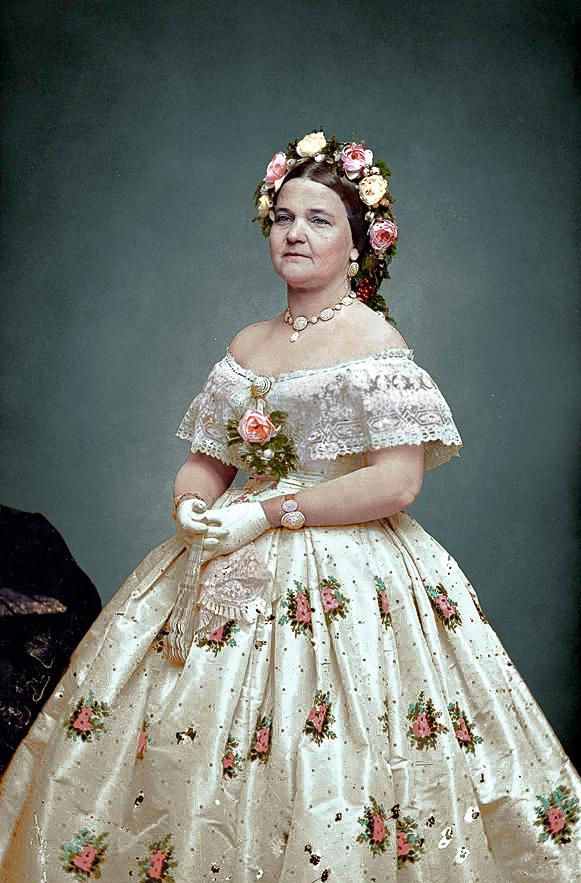
Through his warm relationship with the president and the first lady, Romero befriended Union generals Ulysses Grant and Philip Sheridan. Grant in particular enjoyed visiting with Romero because he was fond of Mexican food, admired Benito Juárez, and loved practicing Spanish with the young diplomat. Armed with the names and support of these men, Romero was able to approach major banks and through sales of bonds raised millions of pesos to fund the Mexican Republican army fighting against Maximilian’s empire. Grant helped the Mexican army secure Springfield rifles, which were much more efficient than those used by the French. After Lincoln’s death, some 3,000 Americans, mostly Union veterans, joined the army of Mexicans who were trying to overthrow Maximilian’s empire.
The way Juárez reciprocated Lincoln’s friendship is evidenced by an ill-advised overture he received from the Confederate government. In late 1861, a southern delegation approached him, hoping to win him over to their cause. Juárez decisively demonstrated his sympathies—he threw the main delegate in a Mexico City jail for thirty days and then expelled him from the country.
The money and weapons secured by Romero helped in Mexico’s final victory over Maximilian, and Benito Juárez returned triumphantly to Mexico City as president in 1866. It is uncertain whether this could have been accomplished without the support of the United States through the efforts of Matias Romero.
Romero lived another forty-three years after Abraham Lincoln’s death. He served in the government of Porfirio Diaz, and in 1882, he was Mexico’s ambassador extraordinaire, based in New York City, until his death in 1898. Throughout his life, he fondly reminisced about his great friendship with President Lincoln, calling him one of the “greatest men I ever knew.”



Comments